
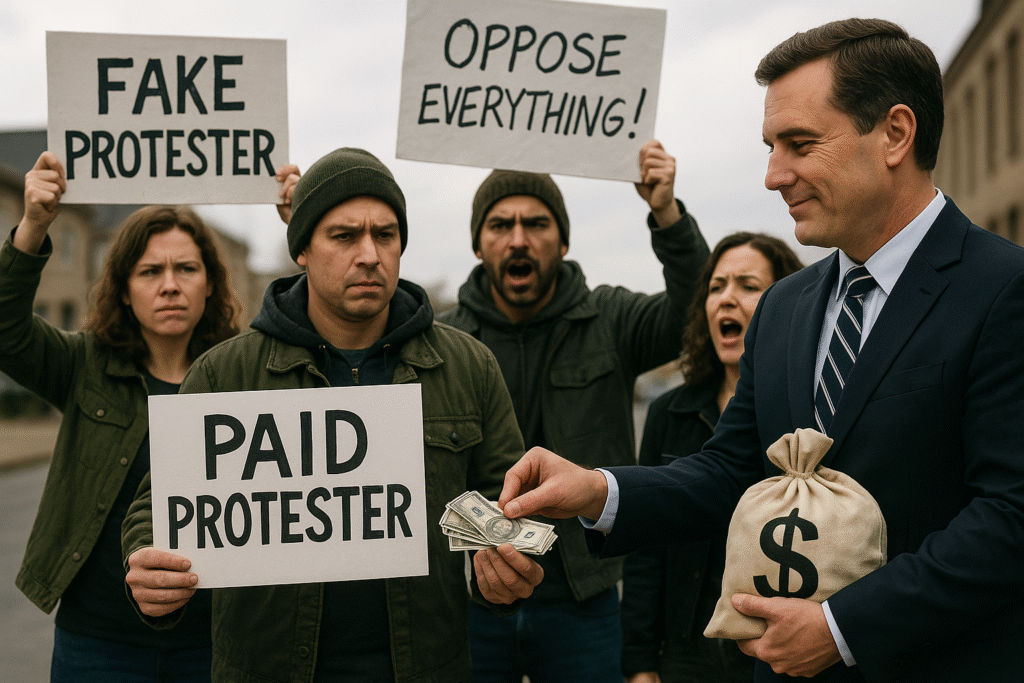
Public hearings today look more like political battlegrounds than community discussions. When a room fills with angry residents, the first question developers often ask is: “Are these people paid?”
The truth is far more complicated.
While social media chatter loves the idea of “paid protesters,” actual paid protestors are extremely rare. What’s far more common—and far more dangerous—is something else entirely: professional organizers quietly inflaming and activating real residents. They provide talking points, signs, messaging, and a narrative engineered to spark outrage. They guide people to the microphone and coach them on what to say.
But here’s the political reality that too many developers ignore:
Whether organizers are paid or not, the people speaking at the microphone are real constituents. And real constituents create real political risk.
That means their anger matters—even if the talking points were fed to them. Even if their information is wrong. Even if they were misled on social media the night before.
Elected officials aren’t grading arguments for accuracy. They are counting upset voters in the room.
Ignoring them—or dismissing them as “fake”—is a catastrophic mistake.
Key Takeaway
Your job is not to prove that your opponents were organized. Your job is to recognize that organized or not, they have political power—and you must engage, understand, and counter them strategically.